Short Bedtime Stories for Kids: 10 Perfect 5-Minute Tales

Ten short bedtime stories that take five minutes or less to tell. Each follows a calming three-act arc (cozy opening, mild curiosity, sleepy resolution) designed to match your child’s pre-bedtime attention window. Research shows a consistent five-minute story every night puts children in the "daily reading" bracket where vocabulary and sleep benefits concentrate.
$2 per story. No subscription.
It's 8:47 PM. The bath ran late. Teeth were a negotiation. Pajamas involved a wardrobe crisis. You've got maybe five minutes before the window closes and overtired meltdown territory begins.
You know you should read a bedtime story. But the guilt math starts: five minutes isn't really reading. It's not a proper story. It doesn't count the way a thirty-minute session on a calm Sunday afternoon counts.
Except it does. And the research says it might count more than you think.
10 Short Bedtime Stories for Kids
A short bedtime story is a five-minute-or-less tale with a calming arc: a cozy opening, a moment of gentle curiosity, and a sleepy resolution. These ten each run five minutes or under, and you can hear them right now — press play for a narrated sample, or open the full story to read it aloud yourself tonight.
 Ages 3-4
The Moon’s Silly Shadow
Mom shows Sam that the scariest shadows are just the moon playing tricks.

 Ages 5-6
The Dragon Who Found His Roar
A shy dragon who can only puff colorful smoke learns to roar, with a little help from Sam.

 Ages 7-8
Campfire Under the Stars
Dad and Sam camp under the Milky Way, learning to leave the forest better than they found it.
 Ages 9-12
Lost in the Crystal Forest
Crash-landed on a planet of glass trees, Coco and Nova help a stranded inventor find her way home — and theirs.
 Ages 5-6
The Princess Who Built Her Own Castle
Princess Sam finds a glowing blueprint in the meadow and builds a castle of her own, with a dragon, a mouse and an owl for a crew.
 Ages 3-4
Sam and the Tiny Dinosaur
Sam finds a tiny Brachiosaurus hatchling in a fern forest, and learns that looking after something small makes you feel bigger.
 Ages 3-4
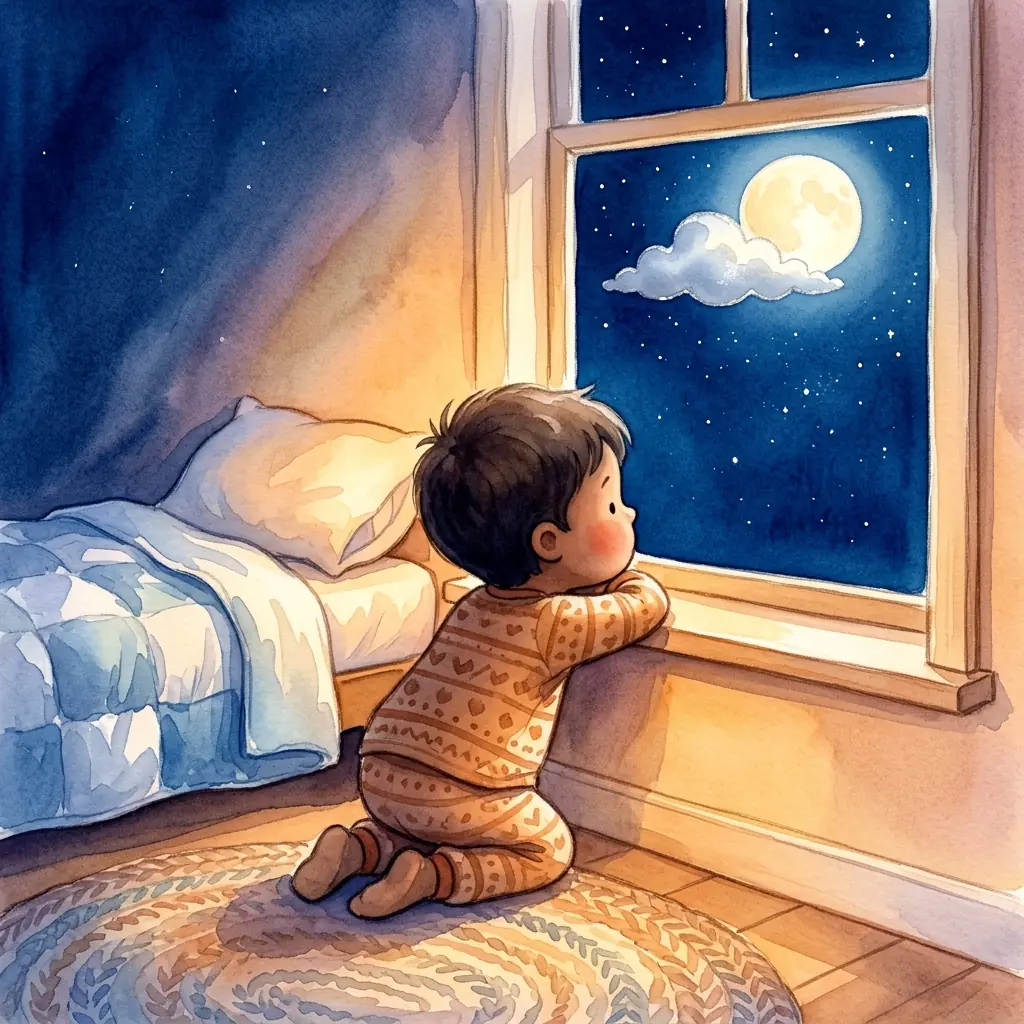
The Little Cloud’s Pillow
Sam notices a tiny cloud drifting past his window, wishing it could be soft enough to be a pillow. A gentle, moonlit five-minute tale.
 Ages 5-6
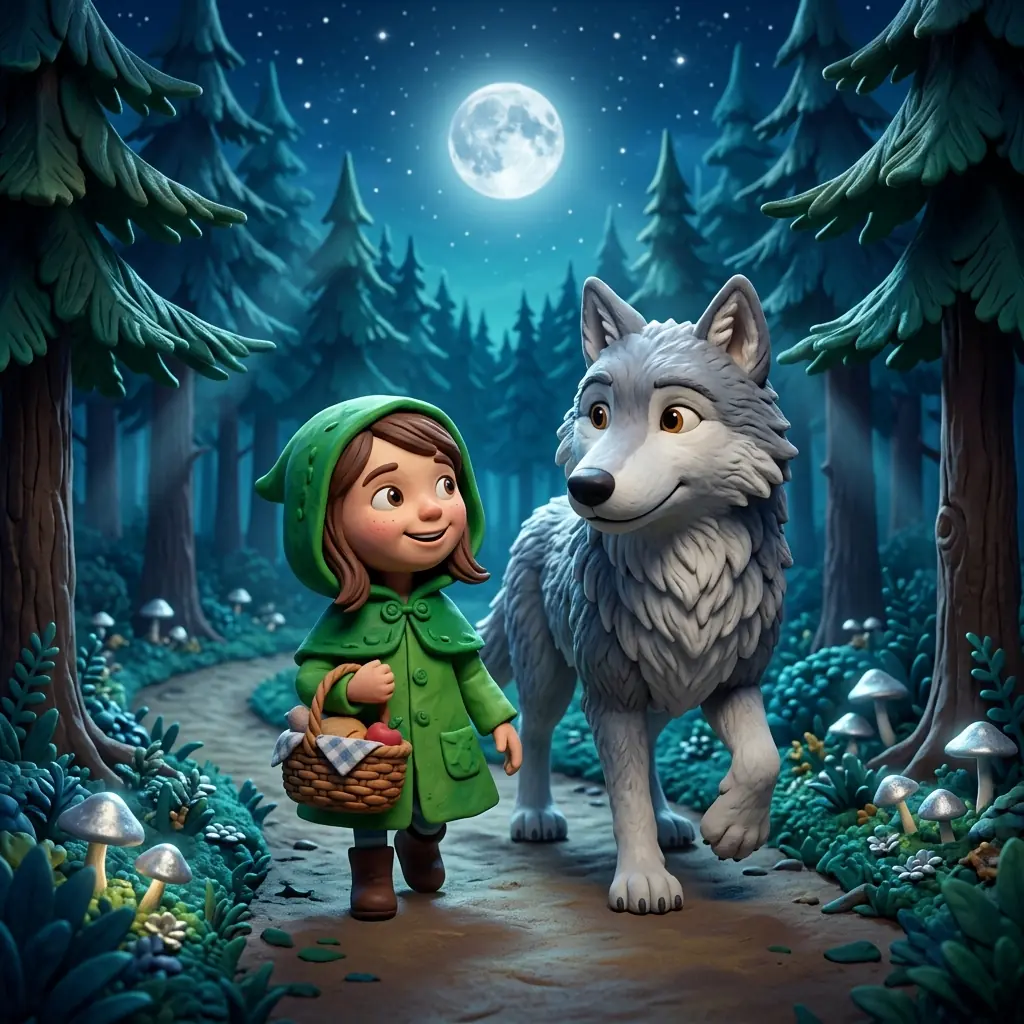
The Wolf Who Walked Home
Sam, in her green cloak, finds a gentle wolf with a thorn in his paw and walks him safely home through the moonlit forest.
 Ages 3-4
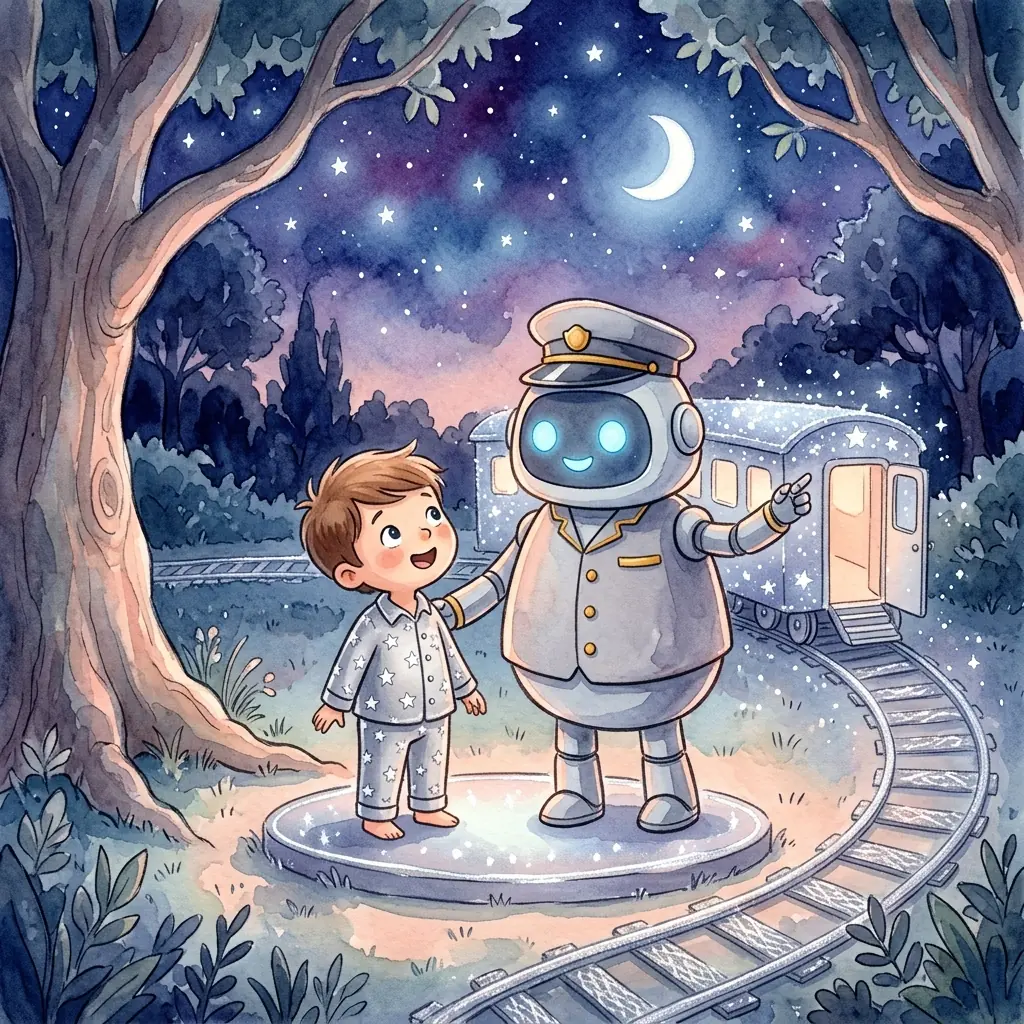
Sam’s Midnight Star Train
A soft toot wakes Sam at midnight, and a glowing little train carries him on a slow, gentle journey through the stars.
 Ages 3-4
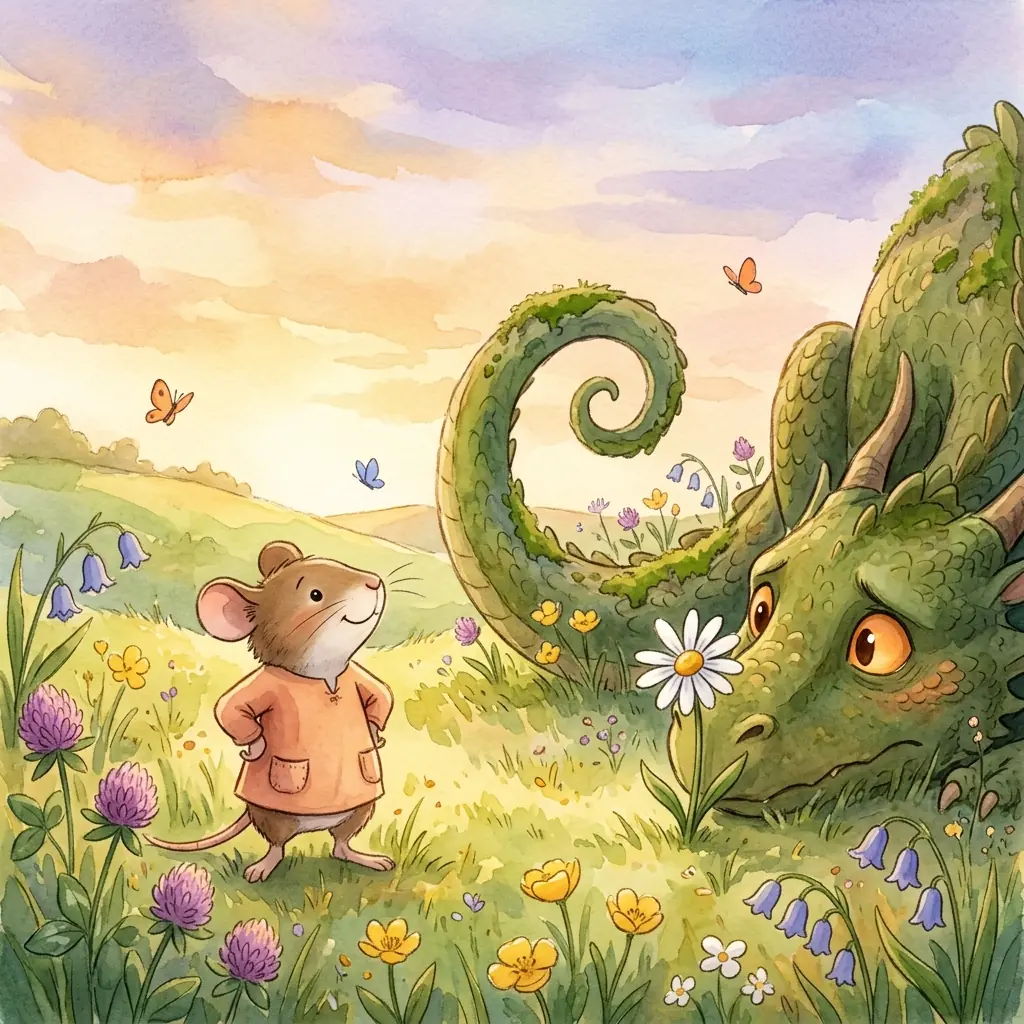
Mossglow Is Brave (Mostly)
The biggest dragon in the meadow is scared of butterflies, shadows and the wind, until a small, brave friend shows him how brave he already is.
All ten live in our story library, with the full text and the recording alongside it. And if you want one where your own child is the hero — their name, their stuffed animal, whatever they're nervous about this week — you can make that with Bedtime Stories.
10 Ideas for Making Up Your Own Short Bedtime Story
Prefer to invent one on the spot? Each of these takes five minutes or less to tell. Read them aloud, use them as a starting point, or use one as a prompt in Bedtime Stories to get a fully personalized, narrated version starring your child.
- The Firefly Jar. Your child finds a jar of fireflies on the windowsill. Each one glows a different color. They release them one by one into the night sky, watching them drift up to join the stars. The last one whispers "goodnight" before it floats away. Ages 3-5. Wind-down level: high.
- The Cloud Shepherd. Your child discovers they can gently guide the clouds across the sky. They arrange them into shapes: a rabbit, a castle, a sleeping bear. The sky fills up, soft and ready for the moon. Ages 3-6. Wind-down level: high.
- The Lost Star. A tiny star falls from the sky and lands in your child’s garden. It’s scared and cold. Your child wraps it in a scarf, gives it warm milk, and carries it back up to the sky on a gentle breeze. Ages 3-5. Wind-down level: very high.
- The Midnight Bakery. Your child discovers a tiny bakery that only opens when the moon comes out. Everything smells like cinnamon and warm bread. They help the baker (a friendly owl) frost one last cake, then walk home through the quiet streets. Ages 4-7. Wind-down level: medium-high.
- The Blanket Fort Expedition. Your child builds a blanket fort that becomes a real place: a soft, warm cave where gentle animals come to sleep. A rabbit, a deer, a small bear. They all settle in together. Ages 2-4. Wind-down level: very high.
- The Sleeping Garden. Your child walks through a garden where each flower closes its petals for the night. The roses whisper goodnight. The sunflowers nod off. The last flower to close is the one right outside your child’s window. Ages 3-5. Wind-down level: very high.
- The Moonboat. Your child climbs into a small silver boat that floats through the night sky. They sail past sleeping birds, dozing clouds, and a whale-shaped constellation before the boat gently docks at their bedroom window. Ages 4-7. Wind-down level: high.
- The Rain Listener. It’s raining outside. Your child lies in bed and listens to what the rain is saying. Patter on the roof (that’s the rain telling the house goodnight). Splish in the puddles (that’s the rain singing to the frogs). Drip on the window (that’s the rain tapping hello, then goodbye). Ages 2-5. Wind-down level: very high.
- The Quiet Race. Your child and their favorite stuffed animal have a race, but the rule is: whoever falls asleep first wins. They try very hard to fall asleep. They close their eyes tightly. They breathe slowly. They relax their toes, then their knees, then their tummy. Ages 3-6. Wind-down level: maximum.
- The Thank You Walk. Your child takes a short walk through their day, past the breakfast table, past the playground, past the bath, and says "thank you" to each moment. The walk ends at their pillow. Ages 4-8. Wind-down level: high.
How Long Is a 5-Minute Bedtime Story?
About 600 to 750 words. Adults read aloud to children at roughly 120 to 150 words a minute, which is slower than silent reading, because you pause at the pictures and do the voices. That pace is the whole reason a story that looks short on the page still fills bedtime.
If you are writing or choosing one yourself, this is the conversion that actually matters:
| Length | Words read aloud | Roughly | Best for |
|---|---|---|---|
| 2 minutes | 240 to 300 | A single picture-book spread | An overtired toddler, or a second story you did not plan on |
| 3 minutes | 360 to 450 | A short picture book | Ages 2 to 4, and school nights that ran late |
| 5 minutes | 600 to 750 | A full picture book | Ages 3 to 8. The default bedtime story |
| 10 minutes | 1,200 to 1,500 | A short chapter | Ages 6 and up, weekends, or a child who settles slowly |
Every story linked above sits in the 5-minute band on purpose. If you want to hear the pace rather than count words, play one: the narration runs at read-aloud speed, not audiobook speed, which is the difference between a story that settles a child and one that keeps them awake.
Quick Bedtime Stories for the Nights You Have No Time
Some nights five minutes is four minutes too many. A quick bedtime story still works if it keeps the shape and drops the detail: one character, one small problem, one gentle fix, lights out. What you cut is description, not structure. A story without an ending leaves a child waiting rather than settling.
The 90-second version of any story
Name the character and where they are. Give them one thing they want. Put one small thing in the way. Let them solve it kindly. End with the character asleep. That is five sentences, and it is a complete story to a four-year-old.
Keep two in your pocket
Pick two of the ideas above and reuse them, changing only one detail each night: the animal, the weather, the lost object. Children do not want novelty at bedtime nearly as much as adults assume. They want the familiar shape, which is also why they ask for the same story for weeks.
And on the nights when you have nothing left, a story you did not have to invent is a reasonable answer. That is what the stories at the top of this post are for.
Hear it for yourself
Listen to a complete 5-minute bedtime story with calming narration and a gentle ending. No signup required.
What Makes a Good 5-Minute Bedtime Story?
A five-minute bedtime story isn't a long story cut short. It has its own structure, designed for a swift emotional arc and a soft landing. Three acts, one thread, and a sleepy ending.
The three-act gentle arc
- 1. A cozy opening. The story begins in a state of calm. Characters are already safe, already comfortable. "In a quiet meadow, where the fireflies danced like tiny lanterns, a small fox curled up in her favorite spot under the old oak tree." The child's nervous system reads the scene and begins to match it.
- 2. A mild curiosity. Something small and gentle happens: a lost star, a new friend, a question to answer. This isn't a conflict that generates anxiety. It's a puzzle that generates warmth.
- 3. A sleepy resolution. The curiosity is satisfied quickly, easily, and the character returns to rest. The final sentences use what sleep consultants call "soporific language": rhythmic, repetitive, and sensory.
How long is a 5-minute story in words?
At a calm bedtime reading pace (100-120 words per minute, with pauses for whispered asides), five minutes works out to roughly 500-600 words. Most children's bedtime publishers target the 300-800 word range.
| Duration | Calm Pace (100 WPM) | Normal Pace (180 WPM) |
|---|---|---|
| 3 minutes | 300 words | 540 words |
| 5 minutes | 500 words | 900 words |
| 10 minutes | 1,000 words | 1,800 words |
Four techniques that make short stories work
- Repetition. Repeated phrases build rhythm without adding length. "Goodnight forest. Goodnight moon. Goodnight fox, sleeping soon."
- Sensory vocabulary. Words like hush, glow, snuggle, drift, and warm activate "sleepy" associations.
- A single thread. One character, one gentle event, one resolution. No subplots.
- A closing ritual. The story ends with a cue that mirrors bedtime: a character closing their eyes, a whispered "goodnight," the lights going out.
Why 5 Minutes Is All You Need
Consistency beats duration. That's not a parenting platitude. It's what longitudinal research shows: children with a consistent language-based bedtime routine slept longer, scored higher on verbal assessments, and showed fewer anxious behaviors. The variable that mattered most wasn't story length. It was whether the routine happened every night.
Researchers at Penn State found that children with a consistent bedtime (varying by less than twenty minutes night to night) displayed significantly better emotional regulation and behavior than children with erratic schedules.
Ohio State University researchers calculated the cumulative word exposure gap:
| Reading Frequency | Words Heard by Age 5 |
|---|---|
| Never read to | ~4,700 |
| 1-2 times per week | ~63,500 |
| Once daily | ~296,600 |
| 5 books per day | ~1,483,300 |
A five-minute story every night puts your child in the "once daily" category. That's the bracket where the developmental benefits concentrate. Currently, about 51% of American preschoolers are read to at least five days a week. In lower-income households, that drops to 39%, a gap driven by time constraints, not intention.
Five minutes, every night, is not a shortcut. It's the protocol.
How Long Can Your Child Pay Attention at Bedtime?
A child's attention at 8:30 PM is not the same as at 10 AM. Developmental psychologists estimate two to three minutes per year of age, but that's a daytime number. At bedtime, after a full day of stimulation, the capacity contracts.
| Age | Daytime Attention | Pre-Bedtime Sweet Spot |
|---|---|---|
| 2-3 years | 4-8 minutes | 3-5 minutes |
| 3-4 years | 6-12 minutes | 5-7 minutes |
| 4-5 years | 8-15 minutes | 7-10 minutes |
| 5-6 years | 12-18 minutes | 10-12 minutes |
| 7-8 years | 16-24 minutes | 12-15 minutes |
Sleep researchers call this the "Fatigue Paradox": as a child becomes more tired, physical activity often increases (stalling, bouncing, protests) while cognitive capacity for focused attention drops. A story that exceeds the pre-bedtime window doesn't create deeper engagement. It creates frustration. This is especially relevant for children with ADHD or other neurodivergent profiles, where the pre-bedtime window may be even narrower.
The five-minute story meets their brain exactly where it is at the end of the day.
How to Handle "One More Story" Requests
"One more story" is a stalling tactic, not a literary request. It peaks around ages two to three as children test boundaries and delay separation. Short stories solve this structurally: unlike a chapter book, a five-minute story is a closed loop with a clear ending.
The two-story rule
Commit to two five-minute stories. That's ten minutes total, sustainable even on rough nights. The child gets the feeling of "more" without the routine exceeding its window. Say it in advance: "Tonight we have two stories, then lights out."
The choice, not the duration
"Do you want the story about the fox or the story about the stars?" This gives the child the autonomy they're craving without letting them control the length. Research shows that offering constrained choices reduces resistance in toddlers.
The bedtime pass
A physical card the child can "spend" on one extra request: a story, a hug, a glass of water. Once used, it's gone until tomorrow. This gives the child real control while maintaining a hard boundary. Sleep consultants report significant reductions in bedtime stalling within the first week.
Why Hearing Their Name Makes Short Stories Hit Harder
In a five-minute story, every sentence matters. And that compression creates an interesting side effect: personalization hits harder. Researchers call it the "self-reference effect": when information is connected to the self, the brain encodes it more deeply.
Children as young as three learn significantly more new words from personalized sections of a book than from generic ones. In a 500-word story, a child's name appears more frequently relative to total word count. The personalization density is higher than in a longer story. The child hears their name woven through a tight, complete narrative, and their brain processes the five minutes as something that happened to them.
At bedtime, when attention is contracted, a short personalized story fits perfectly: concentrated engagement, personal relevance, and a clean ending. Nothing wasted.
Five-Minute Stories, Made for Your Child
Every story in this post can be turned into a personalized, narrated bedtime experience. You pick the age range, choose a theme (or write your own), and in a few minutes your child has a story where they're the hero. Their name, their adventure, their gentle ending.
- Warm, calm narration from our library of 100+ professional voices. Choose a single storyteller or go full cast with distinct character voices.
- Built for the 5-minute window. Stories are calibrated to match your child's age, with the right vocabulary, length, and a calm ending every time. No screens needed. Just press play.
- Fresh every night. Each story is generated new. The Firefly Jar tonight, The Moonboat tomorrow. No repeats unless your child asks for one.
- No subscription. Stories start at $2 each. Credits never expire.
Common Questions
Are 5-minute stories too short to be meaningful?
No. Research shows consistency matters more than duration. A five-minute story every night puts your child in the "daily reading" category, where the developmental benefits concentrate. The jump from zero to daily reading exposes children to over 290,000 more words by age 5.
What age are short bedtime stories best for?
The 5-minute format works best for ages 2 to 6, matching their pre-bedtime attention window. Older children (7-8+) can handle 10-15 minute stories, but short stories still work well on tired nights or busy evenings.
How do I stop the "one more story" cycle?
Set expectations in advance ("two stories tonight"), offer choices instead of extensions ("the fox or the stars?"), and try the bedtime pass technique. Short stories make this easier because each one has a clear, complete ending.
Can I use these story ideas with Bedtime Stories?
Yes. Each theme works as a prompt. Type the theme, pick an age range and voice, and get a fully narrated, personalized version in about three minutes.
What if my child loses interest before the story ends?
Match the story length to your child’s attention span. If your 3-year-old zones out after 3 minutes, try an even shorter version. Every story above can be told in 2-3 minutes by trimming details.
How many words is a 5-minute bedtime story?
About 600 to 750 words. Adults read aloud to children at roughly 120 to 150 words a minute, slower than silent reading because you pause at pictures and do the voices. That works out to a full picture book. A 2-minute story is about 240 to 300 words, a 3-minute story about 360 to 450, and a 10-minute story about 1,200 to 1,500.
What is a good quick bedtime story when I have almost no time?
Keep the shape and cut the detail. Name the character and where they are, give them one thing they want, put one small thing in the way, let them solve it kindly, and end with the character asleep. Five sentences is a complete story to a four-year-old. What you must not cut is the ending, because a story without one leaves a child waiting rather than settling.
Where can I read short bedtime stories online for free?
You can read and listen to complete short bedtime stories free on our showcase, with no signup required. Each one is an original story we wrote and narrated, labelled with a recommended age and runtime, so you can grab a calming five-minute tale even on a busy night. They also work as ready-made prompts: pick one, add your child as the hero, and get a personalized narrated version in about three minutes.
You don't need thirty minutes. You don't need the perfect book. You need five minutes, a calm voice, and a story that ends with your child's eyes closing.
Tonight, that's enough. The research says it's more than enough.
Peer-Reviewed Research
- A Longitudinal Study of Preschoolers’ Language-Based Bedtime Routines (PMC)
- Benefits of a Bedtime Routine in Young Children (PMC)
- Consistent Bedtime Linked with Better Child Emotion and Behavior Regulation (Penn State)
- Sleep Regularity Predicts All-Cause Mortality (Oxford Academic / Sleep)
- Time Deficits with Children: Parent Perceptions and Well-Being (PMC)


