First Dentist Visit: A Story to Read Your Child Beforehand
To prepare a child for a first dentist appointment, walk through the visit in order, use neutral words such as count and clean, agree a stop signal and play dentist at home. This guide includes a short read-aloud story about a first visit, what to say and what to skip.
$2 per story. No subscription.
The best way to prepare a child for a first dentist appointment is to walk through it in advance: what the room looks like, what each person does, what it feels like and how your child can ask for a pause. A short story does this well, because your child can listen to the whole visit while sitting on your lap. Below is a story to read aloud, then what to say, what to skip and a game to play at home.
A Story About the First Dentist Visit
In this story Ivy asks what will happen, hears it in order, and then it does. Read it two or three times in the days before the appointment. Swap in your child's name and details from your own dentist if you know them: the fish tank, the sticker, the stop signal.
Ivy and the Dentist Chair
About 3 minutes, 320 words. Ages 3-7. Change the name to your child’s.
On Tuesday, Ivy was going to the dentist for the first time.
“What will happen?” asked Ivy, hugging her rabbit.
“Let’s go through it,” said Dad. “First, we sit in the waiting room. There are books there, and a fish tank.”
“Fish,” said Ivy. She liked fish.
“Then a person called a dental hygienist says your name. She will be wearing a mask and glasses, because that is her work clothes. She is still the same friendly person under the mask.”
Ivy held her rabbit a bit tighter. “Then what?”
“Then you sit in a big chair. It goes up and down, like a ride. You can press the button yourself if you ask nicely.”
On Tuesday, it all happened just like that. The fish swam. The hygienist said, “Hello, Ivy,” and her eyes smiled over her mask. The chair went up, slowly, and down a little.
“This is my mirror,” said the hygienist. “It is for looking at your teeth. Want to see it on your hand first?” She tapped it on Ivy’s hand. It was cold and a bit tickly.
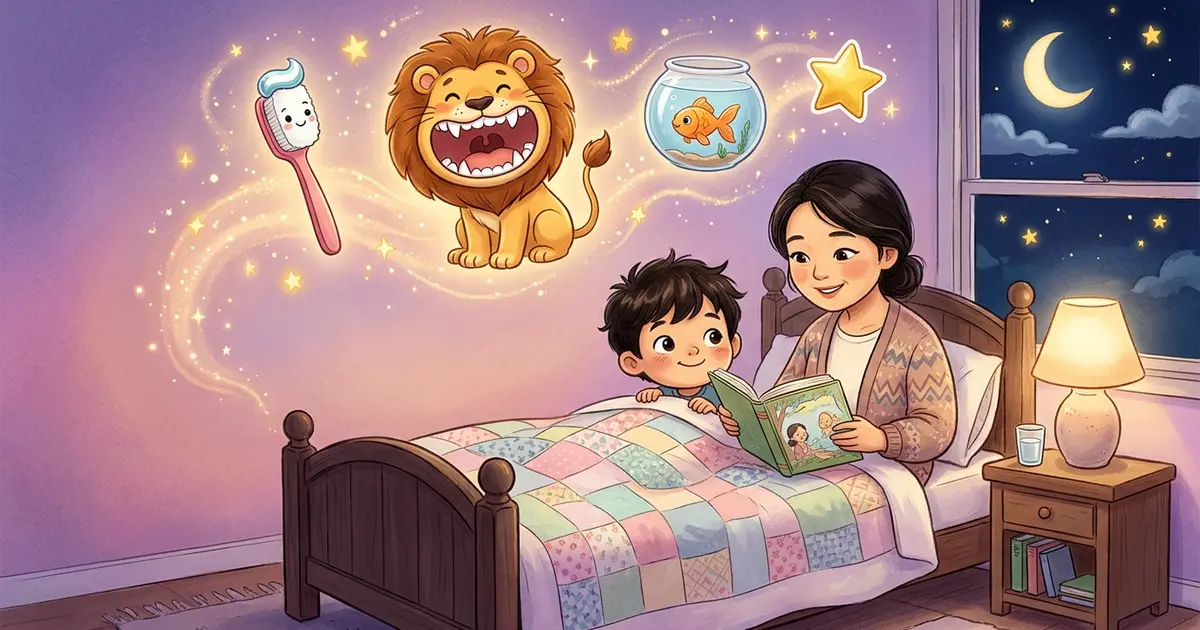
“Now open wide, like a lion.”
Ivy opened her mouth as wide as a lion. The hygienist counted the teeth out loud. “One, two, three, four…” She counted to twenty, and Ivy kept her mouth open the whole time.
There was a small buzzing toothbrush. It made a funny noise, like a bee in a jar. It tickled, and it was soon done.
“If you want me to stop,” said the hygienist, “lift your hand, and I stop. Every time.”
Ivy lifted her hand once, because she wanted a rest. The buzzing stopped. She breathed in and out. Then she nodded, and the hygienist began again.
At the end the hygienist said, “Your teeth are clean and strong. You did the hard part: you came in.”
Ivy got a sticker, a new toothbrush and a ride back down in the chair.
That night, Ivy brushed her teeth with her new toothbrush, in the bathroom mirror, and showed her rabbit her lion mouth. Then she climbed into bed. Dad turned off the light, and Ivy fell asleep, smiling.
Hear it for yourself
Listen to a complete bedtime story with calm narration and a gentle ending. No signup required.
What to Say Before the Visit
- Say it in order. Waiting room, name called, the chair, the mirror, counting teeth, the brush, a sticker. Children relax when they know what comes next.
- Explain the masks. A person in a mask and gloves can look strange. Say it is their work clothes, and that they are friendly under it.
- Use neutral words. “Count your teeth”, “clean your teeth”, “tickly”. Skip “hurt”, “shot” and “drill”, even in a reassurance.
- Agree a stop signal. A raised hand means pause. Tell the dental team before the visit, so they know to respect it.
- Keep it low-key. Tell your child the day before for a toddler, a few days before for a school-age child. A long build-up can raise worry.
- Stay calm yourself. Children read your face. If you dislike the dentist, keep that story for later.
Play Dentist at Home
Role-play turns the visit into something your child controls. Try this for five minutes, once or twice before the appointment:
- Your child is the dentist and a soft toy is the patient. Let them count the toy's teeth with a toothbrush and a spoon for a mirror.
- Swap. You are the patient and your child counts your teeth. Open wide like a lion.
- Swap once more: your child is the patient, you are the dentist. Count slowly, stop when they raise a hand, and praise the stop.
A children's dentist or a picture book can help too, and many dental practices offer a short “meet the dentist” visit with no treatment. Ask when you book. For the research on why stories help with worries, see preparing kids for big moments.
A Dentist Story With Your Child as the Hero
If you want the story to match your dentist, your child's worries and their own name, you can make it in Bedtime Stories:
- Pick your child's age and a real-life story type.
- Type the theme, for example “a first visit to the dentist”.
- Add your child as the hero.
- Put the details in the special instructions: “the dentist has a fish tank, my child is nervous about the mask, raise a hand to stop”.
- Narrated by any of our 100+ voices, in 50+ languages, ready in about two minutes.
- Read it first. The full text comes with the audio, so you can check the story before your child hears it.
- No subscription. Stories start at $2 each. Credits never expire.
Another big change at home? See preparing your child for a new baby and a bedtime story for moving house.
Common Questions
How do I prepare my child for a first dentist visit?
Talk through the visit in plain words, read a short story about it and play dentist at home. Describe what your child will see (a big chair, a small mirror, people in masks), hear (a buzzing brush) and feel (cold, tickly, a little pressure). Do this over a few days, not only the night before.
What age should a child first go to the dentist?
Many pediatric dentists suggest a first visit around the first birthday or when the first tooth appears. Ask your own dentist or pediatrician what they advise. A first visit is often short and mostly about getting used to the room.
What should I avoid saying before the appointment?
Avoid words like “hurt”, “needle” and “drill”, even to say they will not happen: children hear the scary word and forget the “not”. Also avoid bribes that suggest the visit is something to endure, and never use the dentist as a threat. Say “the dentist will count and clean your teeth”.
My child is afraid of the dentist. What helps?
Let your child choose a comfort item to bring, agree on a stop signal such as a raised hand, and ask the dentist to explain each step before doing it. Telling a story where the character feels nervous and then copes gives your child a script. If the fear is strong or the appointment is for a procedure, ask the dental team what they can do.
Can I make a dentist story with my child as the hero?
Yes. In Bedtime Stories, add your child as the hero, type a theme such as “a first visit to the dentist” and add details in the special instructions, such as the name of the clinic’s fish or the stop signal you agreed. Pick one of 100+ voices. The narrated story is ready in about two minutes, in any of 50+ languages, and you can read the text first.
You do not need a perfect first visit. You need one where your child knew what would happen and could ask for a pause. Read the story, play dentist, and let the rest follow.