Funny Bedtime Stories: Why Giggles Before Bed Actually Help Your Child Sleep

Laughter drops cortisol, spikes melatonin, and relaxes muscles for up to 45 minutes. Research shows a specific sequence (giggles first, then calm) puts children in a measurably calmer state than quiet time alone. Here’s the science behind why funny bedtime stories work, a parent’s guide to what’s funny at every age, and 10 silly story ideas matched to your child’s developmental stage.
$2 per story. No subscription.
Every bedtime guide you've ever read says the same thing: dim the lights, lower the volume, minimize stimulation. Create calm. Enforce quiet.
And they're not wrong. The final minutes before sleep should be calm.
But here's what most of that advice leaves out: what happens in the twenty minutes before those final minutes matters just as much. And the research suggests something most parents find counterintuitive. Laughter might be the single best thing you can put in that window.
Not chaos. Not roughhousing until lights-out. A specific, timed sequence: giggles first, then calm. The laughter creates a physiological state (dropped cortisol, spiked melatonin, relaxed muscles) that makes the "calm" part work better than calm alone ever could. This is the "giggles then sleep" effect. And a funny bedtime story is the simplest way to trigger it.
Funny works at bedtime when the giggles wind down into calm. Press play — silly start, sleep-ready ending. Made with Bedtime Stories:
 Ages 3-4
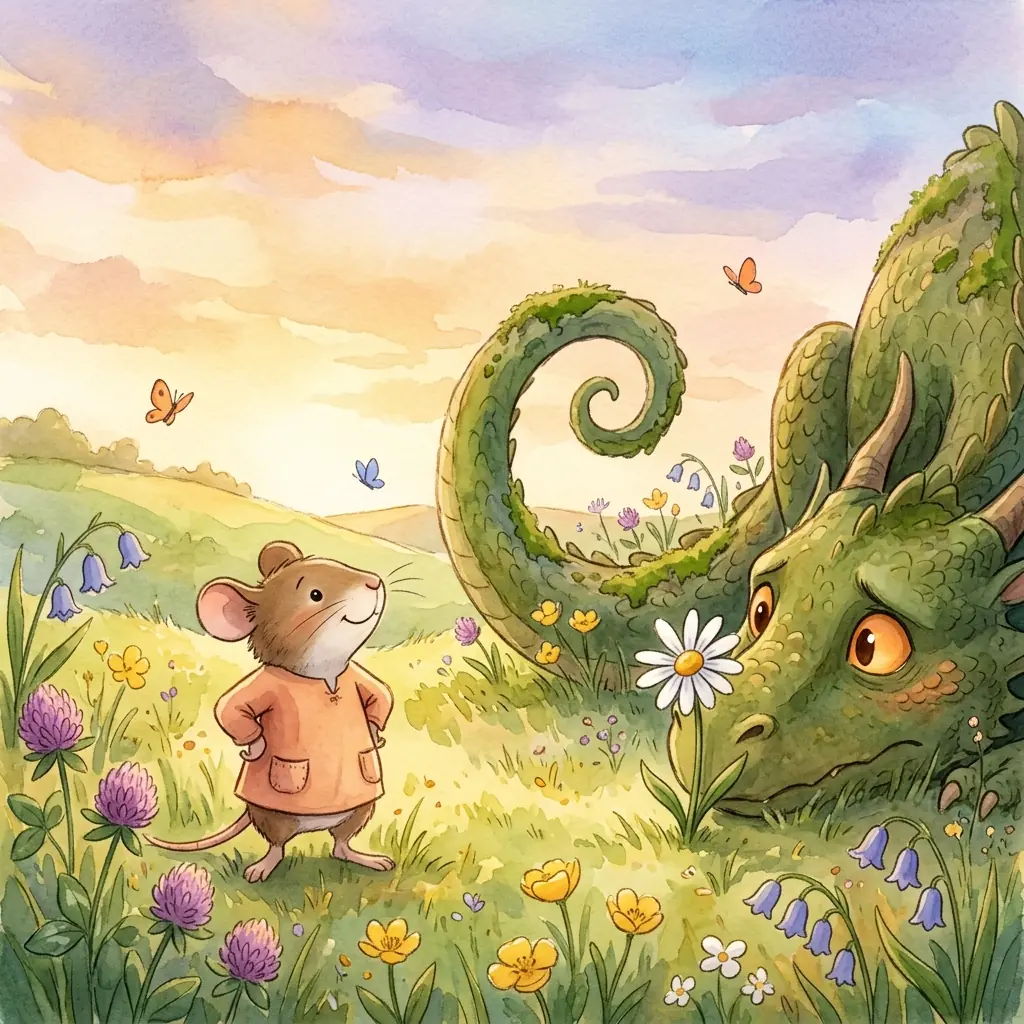
Mossglow Is Brave (Mostly)
Mossglow is the biggest dragon in the meadow — and the silliest. He’s scared of butterflies, dust bunnies, and the moon. Brave little Sam knows just what to do.

What Laughter Does to Your Child's Body (In 45 Minutes)
When your child laughs from the belly, their body initiates a cascade of chemical changes that are perfectly suited for falling asleep. Research published in Advances in Physiology Education and clinical studies on laughter physiology confirm four key mechanisms.
Cortisol drops
Cortisol is the stress hormone that keeps the body in "fight-or-flight" mode. High cortisol at bedtime means a child who can't settle. Clinical studies show that laughter significantly decreases serum cortisol. Even more remarkably, the anticipation of laughter has been shown to lower cortisol and adrenaline levels. If "funny story time" is a known part of the routine, your child's stress levels may start dropping before you even begin.
Melatonin rises
Japanese researchers discovered that watching humorous content before bed significantly increased melatonin levels, the hormone that signals the brain to transition from alert to asleep. In a separate study, nursing mothers who laughed before feeding had higher melatonin in their breast milk, and their infants showed improved sleep. Laughter doesn't just feel relaxing. It is relaxing, at the hormonal level.
Muscles release
A hearty laugh engages fifteen facial muscles, plus the chest, abdominal, and skeletal muscles. After the laugh ends, those muscles enter a relaxation period that can last up to 45 minutes. Researchers have described laughter as "jogging for the innards": the physical exertion of laughing produces the same post-exercise relaxation that helps the body settle.
Endorphins flood
These natural opiates create a sense of warmth and mild euphoria. For children dealing with growing pains, restlessness, or the physical discomfort that often shows up at bedtime, endorphins act as a natural analgesic, soothing the body from the inside.
| What Happens | Effect | Why It Helps Sleep |
|---|---|---|
| Cortisol drops | Stress hormone decreases | Exits "fight-or-flight," enables settling |
| Melatonin rises | Sleep hormone increases | Signals the brain it’s time to rest |
| Endorphins release | Natural opiates flood the body | Creates warmth, relieves discomfort |
| Muscles contract then relax | Tension drops below baseline | Physical relaxation lasts up to 45 minutes |
| Heart rate spikes then drops | Cardiovascular "cool down" | Mimics the body’s natural pre-sleep pattern |
The net effect: about 20 minutes after a good laugh, your child's body is in a measurably calmer state than it would be from quiet time alone. Not just relaxed. Relaxed below baseline. That's the window where sleep comes easiest.
The 20-Minute Rule: When to Giggle and When to Stop
Here's where most parents get this wrong.
If you tickle your child at 8:55 and expect them to sleep at 9:00, you'll get the opposite of what you want. Laughter initially raises heart rate and blood pressure. The body is temporarily in an activated state. This is why many parents conclude that laughter and bedtime don't mix.
But they're only seeing half the picture.
Approximately 20 minutes after the laughter ends, every physiological measure drops below its original baseline. Heart rate, blood pressure, muscle tension: all lower than they were before the laugh. This is the refractory period, and it's the key to making humor work at bedtime.
T-minus 40 minutes: The silly stuff
This is the window for the funny book, the silly voices, the absurd story about a dragon who's afraid of butterflies. Let the giggles happen. Encourage them. Read with exaggerated voices. Make mistakes on purpose. This is when you want activation, because it primes the relaxation that follows.
T-minus 20 minutes: The transition
Shift from out-loud giggles to warm silliness: gentle humor, rhythmic language, quieter voices. This bridges the energy down without abruptly cutting off the fun. A story with a calming arc (funny beginning, gentle ending) works perfectly here. Our short bedtime stories are designed with exactly this kind of arc.
T-minus 5 minutes: The calm
Lights dim. Voice soft. The body has entered its refractory state. Melatonin is rising. Muscles are loose. This is the moment all the laughter was building toward.
The mistake isn't using humor at bedtime. The mistake is using it as the last thing instead of the second-to-last thing.
Why Kids Laugh: A Parent's Guide by Age
What makes a child laugh depends almost entirely on what they've recently figured out about the world. Humor is, at its core, a violation of expectations. And you can only violate expectations your child has already formed. Research in developmental psychology tracks humor milestones alongside cognitive ones.
Ages 1-3: "That's not how it works!"
Toddlers have just learned the "rules": spoons go in mouths, shoes go on feet, hats go on heads. What they find hilarious is deliberate rule-breaking. A shoe on your head. A spoon in your ear. Putting pajamas on a stuffed animal instead of the child. The humor is physical and object-based. They're laughing because they know the right answer and you're doing it wrong.
Best story approach: Characters who put things in the wrong places, use objects incorrectly, or get dressed in hilariously wrong order. Simple gags with a predictable punchline.
Ages 3-5: "That's so silly it can't be real!"
Preschoolers graduate from physical rule-breaking to conceptual absurdity. They understand that cats say "meow," so a cat that says "moo" is peak comedy. They've learned social taboos, so "bathroom humor" (to a parent's dismay) is irresistible. And they love repetition: the same joke, the same funny word, the same ridiculous premise, told 47 times in a row. For more on what works for this age group, see our guide to bedtime stories for preschoolers.
Best story approach: Animals that do the wrong thing, characters with absurd names or behaviors, repetitive refrains the child can join in on, mild taboo humor (a character who burps at inopportune moments).
Ages 6-8: "Did you catch the double meaning?"
School-age kids develop wordplay. They understand that words can have multiple meanings, that sentences can be structured to create surprise, and that logical absurdity is different from physical absurdity. This is the golden age of knock-knock jokes, puns, and riddles. They laugh because they got it. The humor validates their growing intelligence. Our guide to bedtime stories for 5-8 year olds covers more on what this age group needs.
Best story approach: Puns woven into the narrative, characters who misunderstand idioms ("it's raining cats and dogs" taken literally), riddle-based plot points, clever reversals where the "small" character outsmarts the "big" one.
Ages 9-12: "Do you see what they're really saying?"
Older children develop the Theory of Mind needed for irony and sarcasm. They can understand that a character means the opposite of what they say. They appreciate social commentary, parody, and humor that requires reading between the lines. Their laughter is more selective. It signals sophistication, not just surprise.
Best story approach: Narrators with a dry, wry voice. Characters who use sarcasm. Parodies of genres the child knows (fairy tale send-ups, "documentary-style" animal stories). Humor that rewards re-listening.
| Age | What's Funny | Why | Story Approach |
|---|---|---|---|
| 1–3 | Wrong objects in wrong places | They know the right answer | Physical gags, wrong-order dressing |
| 3–5 | Absurdity, taboo words, repetition | Rules exist to be broken | Animals doing wrong things, refrains |
| 6–8 | Puns, riddles, wordplay | Language mastery celebration | Double meanings, idioms gone literal |
| 9–12 | Irony, sarcasm, parody | Social sophistication | Dry narrators, genre send-ups |
How Funny Stories Fix Bedtime Battles
If your child resists bedtime, the reason is almost always one of three things: they don't want to stop what they're doing, they don't want to be alone, or they're anxious about the dark. Humor addresses all three.
It defuses power struggles
Bedtime is one of the few daily routines where the child has zero control. You decide when. You decide how long. You decide lights-out. For a child who spent all day being told what to do, bedtime is the last stand.
Funny stories flip the dynamic. When a character in a story uses every excuse the child would use to stay awake ("But I'm not tired!" "Just five more minutes!" "One more glass of water!") and the child gets to be the one saying "no, go to sleep," the power structure reverses. The child becomes the authority figure. The need to resist dissolves because they're no longer being controlled: they're in control.
It disarms fear
Psychologists call this the "benign violation" theory: we laugh when something that seems threatening turns out to be harmless. A monster that's afraid of its own shadow. A ghost that can't find its sheet. A dragon that sneezes glitter instead of fire.
When a child laughs at these scenarios, they're processing fear. The "cognitive shift" from threat to comedy gives them power over the thing that scared them. They're not suppressing the fear. They're reframing it. The next time they think about monsters in the dark, the association is "the silly one who trips over its tail," not the scary one from the movie. This is the same principle behind why bedtime stories matter for emotional development.
It builds the connection kids need to separate
Sleep is a form of separation. Your child is leaving the warmth of your presence for the solitude of their room. For this to feel safe, they need the attachment bond to be strong enough to survive the distance.
Shared laughter releases oxytocin, the bonding hormone. Research from Penn State found that parents who use humor have significantly better relationships with their children, and those children are better equipped to handle stress and daily challenges. A funny story doesn't just make bedtime pleasant. It makes the leaving part possible.
10 Funny Story Ideas Your Child Will Beg to Hear Again
Each of these story ideas is built around a specific humor mechanism that's developmentally matched to the target age. They're designed to make your child laugh, and then, 20 minutes later, sleep.
"The Backwards Bedtime" (Ages 2-4)
Humor type: Object reversal
Your child tries to get ready for bed but does everything backwards: brushes teeth with a fork, puts shoes on as pajamas, reads a book upside-down. They "correct" each mistake. Physical absurdity meets toddler confidence.
"The Dragon Who Was Scared of Everything" (Ages 3-5)
Humor type: Benign violation / fear reframing
A mighty dragon is terrified of butterflies, puddles, and his own sneeze (which shoots glitter). Your child helps the dragon face each fear using the silliest solutions possible. Fear becomes something to laugh at, then let go of.
"The Royal Sandwich Disaster" (Ages 3-5)
Humor type: Conceptual absurdity
Your child is invited to a royal feast, but the king insists every dish is a sandwich: soup sandwiches, spaghetti sandwiches, ice cream sandwiches (which are technically correct). Escalating absurdity with a repetitive "But that's not a sandwich!" refrain.
"The Animal That Couldn't Remember Its Sound" (Ages 3-5)
Humor type: Mislabeling
A cow that oinks, a pig that tweets, a duck that roars. Your child has to teach each animal the right sound. The animals keep getting it hilariously wrong. The final animal gets it right, but it's the wrong animal.
"The Pillow Fort That Ate the Living Room" (Ages 4-6)
Humor type: Cause-and-effect chaos
Your child builds a pillow fort that keeps growing: through the door, down the hallway, into the yard, across the street. Increasingly silly attempts to stop it (a pillow vacuum, a couch barricade, asking the fort politely to stop).
"The Knock-Knock Door" (Ages 5-7)
Humor type: Wordplay / riddles
Your child finds a magical door that only opens when you tell it a joke. Each room behind the door matches the punchline. Say "orange you glad I didn't say banana?" and the room is filled with bananas. The final room? Their own bedroom. The punchline is "goodnight."
"The Pajama Ninja" (Ages 5-8)
Humor type: Power reversal / physical comedy
Your child discovers their pajamas have secret ninja powers, but only ridiculous ones. The left sleeve shoots marshmallows. The right leg makes fart sounds when they walk. The hood turns invisible (but only to adults). They use these "powers" to defeat a pillow monster.
"The Robot Who Learned Bedtime" (Ages 6-8)
Humor type: Literal interpretation / logical absurdity
A robot follows bedtime instructions literally. "Hit the hay" = punches a bale of hay. "Catch some Z's" = chases the letter Z around the room. "Hit the sack" = karate-chops a sack of potatoes. Your child has to teach the robot what idioms actually mean.
"The Totally True and Not At All Made-Up Field Guide to Bed Monsters" (Ages 7-10)
Humor type: Parody / dry narration
A "documentary-style" guide to the creatures that live under beds: the Sock Thief (diet: exclusively left socks), the Dust Bunny (actually adorable), the Mattress Troll (afraid of children). Your child is the field researcher. Narrated in a deadpan nature-documentary voice.
"The Worst Fairy Tale Ever Told" (Ages 8-12)
Humor type: Genre parody / irony
A narrator tries to tell a fairy tale but keeps getting interrupted by a child who points out every cliche. "Once upon a time..." "What time?" "There was a beautiful princess..." "Why does she have to be beautiful?" The story keeps getting rewritten until it's completely ridiculous and entirely the child's creation.
Hear it for yourself
Every silly premise above can star your child by name, narrated in a voice with real comedic timing. No signup required.
How to Make Any Bedtime Story Funnier (5 Techniques)
You don't need a special book. These techniques turn any story into a giggle generator.
The wrong voice. Read the brave knight in a squeaky mouse voice. Give the tiny kitten a deep booming bass. Voice mismatch is one of the simplest and most reliable humor triggers for kids under 8.
The deliberate mistake. "And then Goldilocks sat in the bear's... bathtub?" Let your child correct you. The correction is where the laugh lives.
The escalating pattern. Start reasonable, then get absurd. "She packed a sandwich, an apple, a water bottle, a trampoline, seven penguins, and the entire ocean."
The pause. Comedy lives in timing. Before the punchline, stop. Wait. Let the anticipation build. Three-year-olds will giggle from the pause alone.
Research consistently shows children laugh harder at stories that involve them. Their name. When the character sharing the joke has your child's name, lives in your child's world, and faces your child's specific absurdities, the humor hits different. This is one of the reasons audio bedtime stories work so well: when you hear your own name in a story, every joke lands closer to home.
Giggle Stories, Built for Your Child
Every story idea above can become a personalized, narrated bedtime experience starring your child. The humor research is clear: children laugh harder at stories that involve them. When the character has your child's name and faces their specific brand of silliness, every joke lands closer to home.
Bedtime Stories was built for exactly this:
- Your child as the main character. Not a generic stand-in. Their name, their age-appropriate vocabulary, their kind of funny.
- 100+ voices that can actually do comedy. A funny story needs a voice with timing: the pause before the punchline, the exaggerated gasp, the deadpan delivery. Our voice library includes warm comedic narrators, character voices, and full-cast mode for stories with multiple ridiculous characters.
- Age-matched humor. The AI generates for four vocabulary levels (3-4, 5-6, 7-8, 9-12). A funny story for a three-year-old is built on physical absurdity and repetition. A funny story for a nine-year-old uses wordplay and irony.
- No screen, no subscription. Create the story during the day, play the audio at night. Stories start at $0.99 each with no recurring charges.
Peer-Reviewed Research
- The Physiological Effects of Laughter (Find a Psychologist)
- Humor, Laughter, Learning, and Health: A Brief Review (Advances in Physiology Education)
- Laughter Elevates the Levels of Breast-Milk Melatonin (ResearchGate)
- Humor Coping Reduces Avoidance Coping and Perceived Stress (PMC)
- Infant Humor Perception from 3 to 6 Months and Attachment at One Year (PMC)
- Healing with Laughter: Therapeutic Power of Laughter Yoga in Pediatric Health (PMC)


