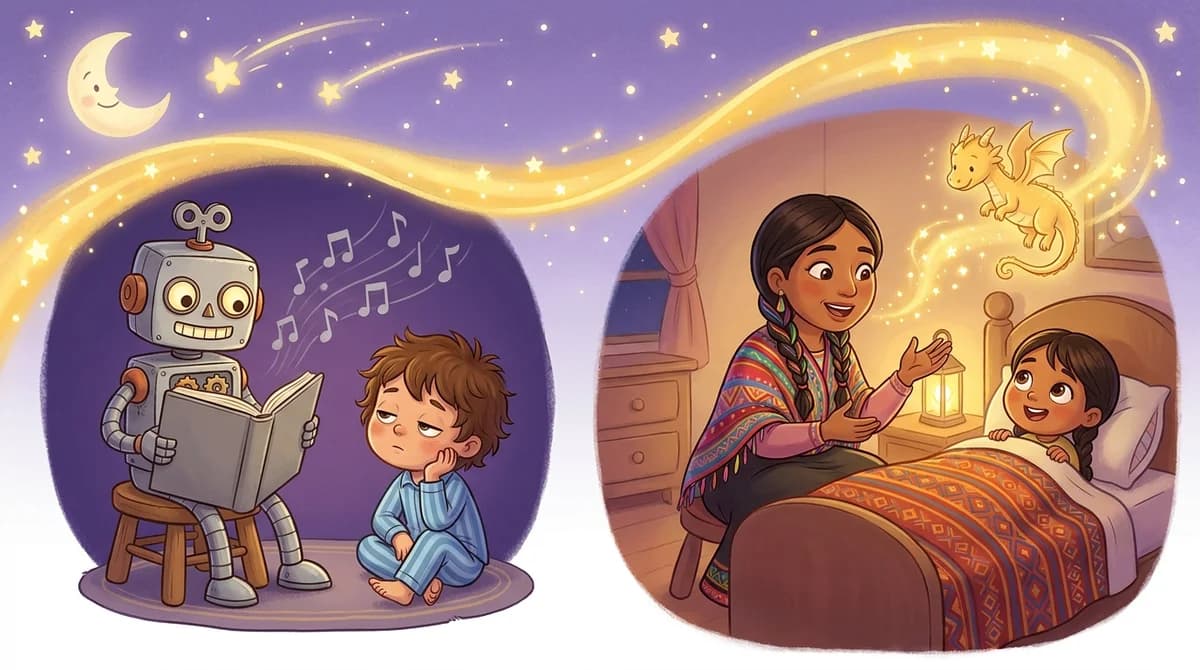
Personalized Books for Kids: Printed vs Digital (Which One Is Worth It?)
Printed personalized books make the better gift: a hardcover with the child’s name, kept for years, but each tells one story and needs shipping. Personalized digital stories suit the nightly routine: a new story with real details from your child’s life, ready the same day for a few dollars. Many families use both.
$2 per story. No subscription.
In 1990 the children's literature scholar Rudine Sims Bishop wrote that books can be windows and mirrors. A window shows a child someone else's world. A mirror shows them their own. Bishop was writing about children who rarely saw anyone like themselves in books, and her point still holds: readers look for their mirrors.
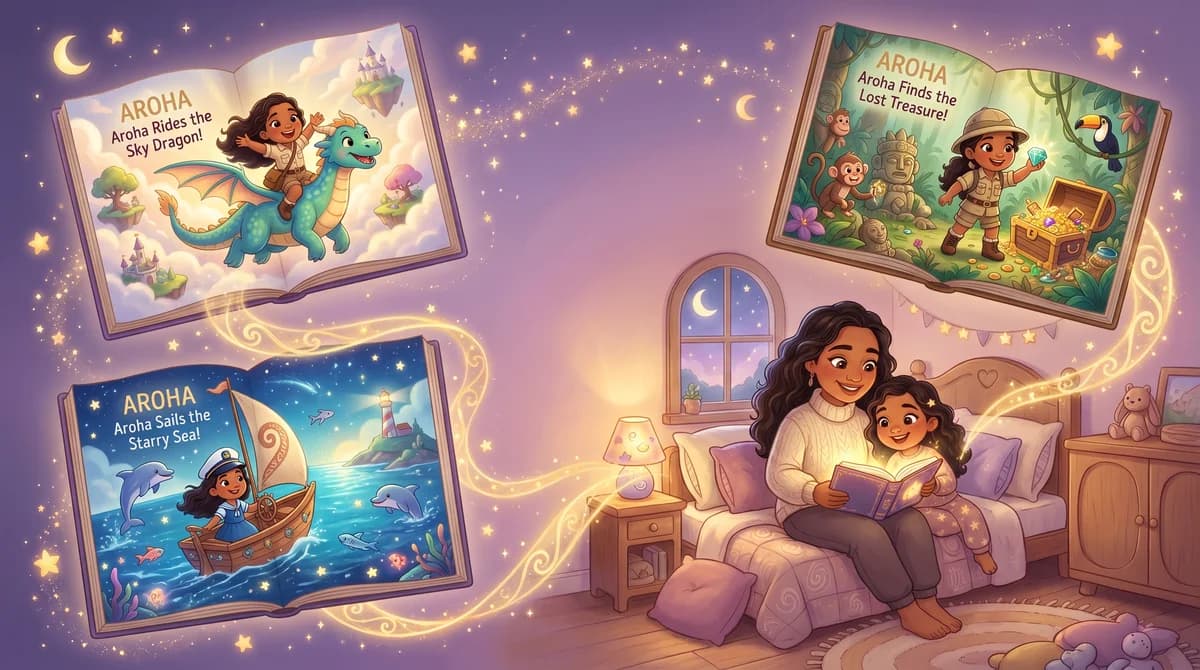
A personalized book is a literal mirror. Your child's name is on the cover, the hero looks like them, and the story happens to them. That is why personalized books for kids are a popular gift for birthdays and the holidays.
Today there are two very different kinds. Printed personalized books arrive in the post as hardcovers. Personalized digital stories are made on demand and read or played on the same day. We make the second kind, so we have a stake in this question. This guide tries to be fair to both: what each costs, what it does well, and which one fits a gift, a bedtime routine, or a grandparent far away.
What a Child's Own Name Does in a Story
Before comparing products, it helps to know what personalization can and cannot do. The research is young and narrow: two small studies and one well-known essay.
- Children learn words from the personalized parts. In a 2014 study by Natalia Kucirkova and colleagues, 18 preschoolers (average age just under four) heard a picture book with some personalized sections and some ordinary ones, with new words in each. A week later, they knew the words from the personalized sections significantly better.
- Children tend to learn the letters of their own name first. A 2006 study of 339 four-year-olds, mostly from low-income families, tested four explanations for the order in which children learn letters. One was an "own-name advantage", and it held. Seeing their own name is one reason a child may know those letters first. The study was about letters, not stories.
- Bishop argued that being the hero matters most for children who are rarely shown. Her 1990 essay was about representation, and it is an argument, not a study of personalized books. For a child who seldom sees their skin, family or home in books, a story where they are the hero may mean more than a cute gift.
None of this depends on paper or a screen. The name in the story is what does the work, in any format. The practical questions are how often you want a new personalized story, and what it is for. For the wider research on reading aloud, see why bedtime stories matter.
Printed Personalized Books: What You Pay For
Printed personalized story books, often sold as custom books for kids, are made to order: you enter your child's name and choose how the hero looks, and the shop prints and ships the book. These are three of the best-known shops, with prices from their own sites on October 26, 2026, before shipping. Hooray Heroes' $39.99 is a sale price against a $59.99 list price; the other two are list prices:
| Shop | Price per book | Good for |
|---|---|---|
| Wonderbly | From $34.99 | A wide range of picture books, for kids and for adults |
| Hooray Heroes | Mostly $39.99 on sale (list $59.99) | A hero who looks like your child: skin tone, eye color, hairstyle and hair color |
| I See Me! | Mostly $29.99 to $34.99 | Picture books and board books for younger children |
What printed books do best
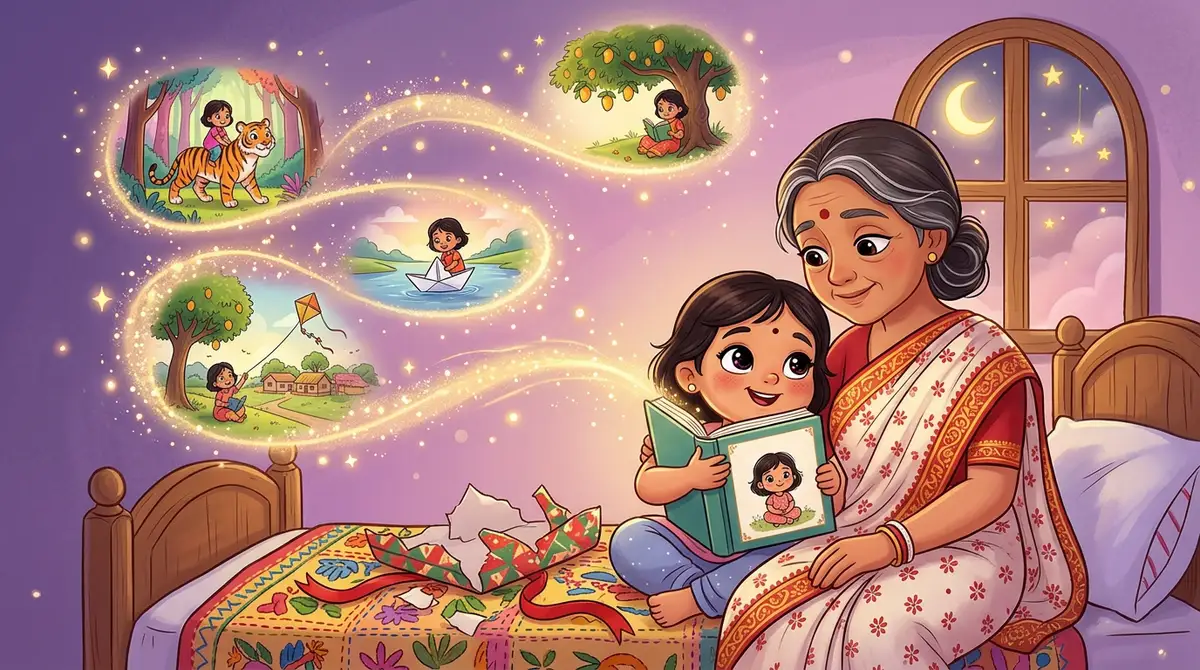
- The gift moment. A child unwrapping a hardcover with their own name on the cover is hard to beat. For a birthday, the holidays or a new baby, it feels like a real present.
- A keepsake. A book sits on the shelf for years. It does not need a charged phone or an account, and it can be pulled out again at sixteen.
- Paper. A 2018 meta-analysis of 54 studies with more than 171,000 readers found that people understood texts better on paper than on screens. The gap showed up for informational texts, but not for stories alone, so it is no reason to pick paper for a storybook. What a printed book does give you is a screen-free lap.
Where printed books fall short
- One story. Each book tells the same story every time. Some children love that. Others know it by heart within a week.
- Time. The book is printed and posted, so it cannot help tonight, and the holiday rush makes delivery slower.
- The personalization is a template. The name and the look change, but the plot is written in advance for every child. Your child's real fear of the dentist or their dog's name usually cannot go in.
- Cost per story. At about $35 a book, a new personalized story every week would cost more than $1,800 a year. Printed books suit gifts better than nightly stories.
Hear it for yourself
Curious what a personalized digital story sounds like? Listen to a full example. No signup required.
Personalized Digital Stories: What Changed
Personalized digital stories are written new for each request. You describe your child and the story you want, and a few minutes later you have a text to read, often with pictures and narration. Several apps now do this; our comparison of personalized bedtime story apps covers the main ones.
What digital stories do best
- A new story every night. The same child, a new adventure. For a bedtime routine, where the order of the evening stays the same but the story can change, that variety keeps children interested.
- Details beyond the name. Their best friend, the family dog, the new school on Monday, the dentist visit on Friday. A story can help a child rehearse a real event, which a printed template cannot.
- A voice when you cannot read. Narration means your child still hears a story when you are traveling, working late or out of voice.
- Ready the same day. No printing and no shipping.
- Cost. A story at Bedtime Stories costs $2, or $15 for a pack of ten.
Where digital stories fall short
- Nothing to unwrap. A digital story does not sit on a shelf. For a big gift moment, it is the weaker choice.
- A device is involved. If the story plays from a phone, start it and put the phone face down or out of reach. Our guide to screen time versus audio stories explains why listening is different from watching.
- Illustrations vary. Generated pictures are not to every parent's taste. Look at sample stories before you buy.
- Your child's data. Read what an app asks for. Some want photos of your child. A first name and an age range are enough for a good story.
Printed or Digital? Pick by the Job
Neither format wins everywhere. Each is better for something specific:
| What you need | Better choice | Why |
|---|---|---|
| Birthday or holiday gift | Printed | The unwrapping moment and a keepsake for the shelf. |
| Nightly bedtime routine | Digital | A new story every night at a few dollars per story. |
| A first sleepover, dentist visit or new sibling | Digital | The story can be about the real event, this week. |
| Grandparent far away | Digital | Made and shared the same day, with no shipping. |
| Toddler under three | Printed | Short, sturdy, read together again and again. |
| A screen-free bedtime | Printed, or digital audio | A book needs no device. An audio story needs one only to press play. |
| Last-minute present | Digital | No order-by date. |
For many families the answer is both: one printed book for the shelf, and personalized stories for the other nights of the year.
A Quick Gift Guide
If you are buying a personalized book for a child as a gift, start here.
- For the main present: a printed hardcover. Order early, check the holiday order-by date on the shop's shipping page, and allow extra time if it ships from abroad.
- For an add-on that lasts: a pack of personalized stories. The book is opened once; the stories carry on for weeks of bedtimes.
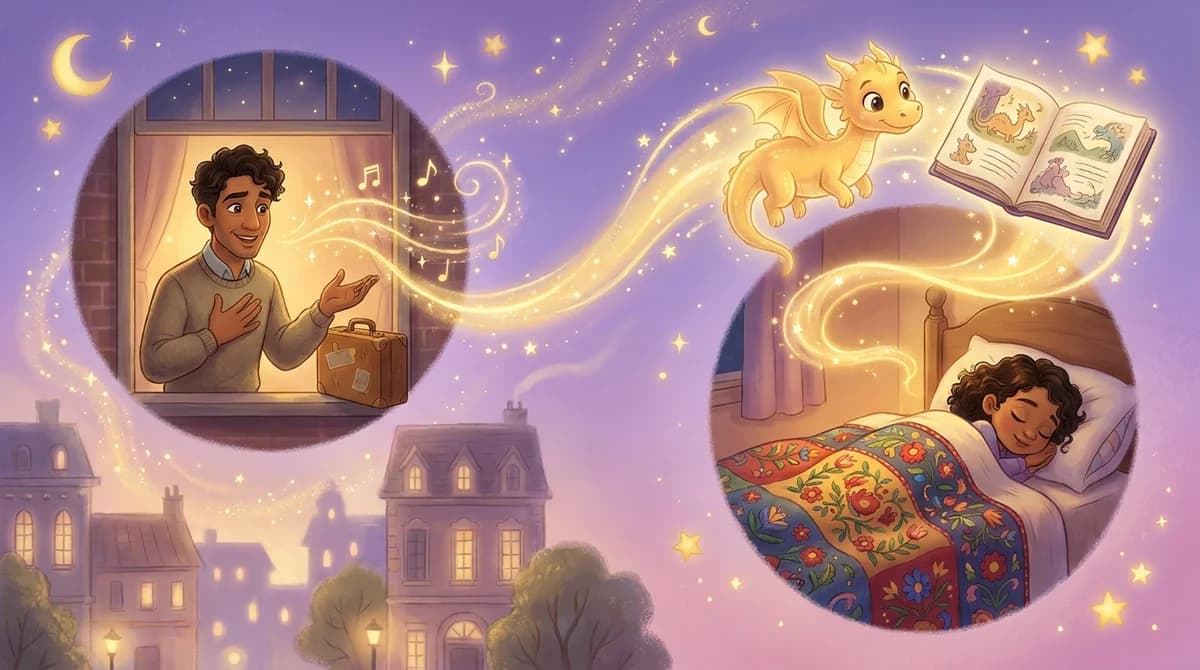
- For a grandparent far away: a digital story starring the grandchild, shared the same day. With a free custom voice, it can be narrated in the grandparent's own voice. Our guide to long-distance bedtime stories has more ideas.
- For the child who has everything: both. A book for the shelf and a few stories about the things they care about this month.
Before you buy any personalized book
- Read a preview of the story, not only the cover. Some books bend the plot or rhyme around the name.
- Check the look options if likeness matters to you: skin tone, hair texture, glasses.
- Check the age range. A long story for a two-year-old will not be read twice.
- Check what personal data you are asked to give, and why.
Hear a Personalized Digital Story
If you have only seen printed personalized books, here are two stories from our library. Sam is the hero in both. In a story you make, your child's name, age level and theme take Sam's place.
 Ages 5-6
The Princess Who Built Her Own Castle
Princess Sam finds a glowing blueprint in the meadow and builds a castle of her own, with a dragon, a mouse and an owl for a crew.

 Ages 7-8
Campfire Under the Stars
Dad and Sam camp under the Milky Way, learning to leave the forest better than they found it.

The first uses Full Cast mode, with a different voice for each character. The second has one storyteller. Our guide to narrator versus full cast voices explains the difference.
For Every Other Night of the Year
A printed personalized book is one story. With Bedtime Stories, your child can be the hero of a new one whenever you like.
- Written for your child each time. Their name, their theme, and words pitched for one of four age levels from 3 to 12. Every story is written from scratch for your child.
- Narrated, with cover art and full text. Choose from 100+ voices, or give each character its own voice with Full Cast.
- Designed with child safety in mind. Stories are written for gentle endings at your child's age level, and you can read the full text before your child hears it.
- No subscription. $2 a story, credits that never expire, and MP3 downloads you keep.
Your first story is ready a few minutes after you describe it.
Keep Reading
Comparing apps? See the best bedtime story apps and the best AI bedtime story generators. Planning the evening? Our bedtime routine guide shows where a story fits, the age-by-age bedtime story guide helps you pick stories for your child's age, and our short bedtime stories are ready for tonight.
Common Questions
How much do personalized books for kids cost?
Printed personalized picture books from the big shops cost roughly $30 to $40 before shipping. On October 26, 2026, Wonderbly books started at $34.99, most Hooray Heroes books were on sale at $39.99 (list price $59.99), and most I See Me! books were $29.99 to $34.99. Personalized digital stories cost much less per story: at Bedtime Stories a story is $2, or $15 for ten.
Do personalized books help children learn?
Early research says they can. In a small 2014 study, preschoolers learned new words better from the personalized parts of a book than from the parts that were not personalized. Other research shows that four-year-olds tend to learn the letters in their own name earlier. The studies are small, so treat personalization as a nice extra, not a shortcut to reading.
What is the best personalized book for a toddler?
For a toddler, choose a short printed board book or picture book with the name on the cover and large pictures, and read it together many times. Toddlers love repetition, so one personalized book that is read every night is worth more than many that are read once. Digital stories work better from about age three, when children can follow a spoken story.
When should I order a personalized book for Christmas?
Every printed book is made to order and then shipped, so order early. Check the holiday order-by date on the shop’s own shipping page, and allow extra time for international delivery. A personalized digital story has no order-by date: you can make one on Christmas Eve.
Can a grandparent send a personalized story from far away?
Yes. A printed book needs shipping, but a digital story can be made and shared the same day. With Bedtime Stories, a grandparent can make a story starring their grandchild, share it, and even have it narrated in their own recorded voice.
Personalization and Learning
- Reading Personalized Books with Preschool Children Enhances Their Word Acquisition (Kucirkova, Messer and Sheehy, First Language, 2014)
- An Investigation of Four Hypotheses Concerning the Order by Which 4-Year-Old Children Learn the Alphabet Letters (Justice et al., 2006, ERIC)
- Mirrors, Windows, and Sliding Glass Doors (Rudine Sims Bishop, 1990)